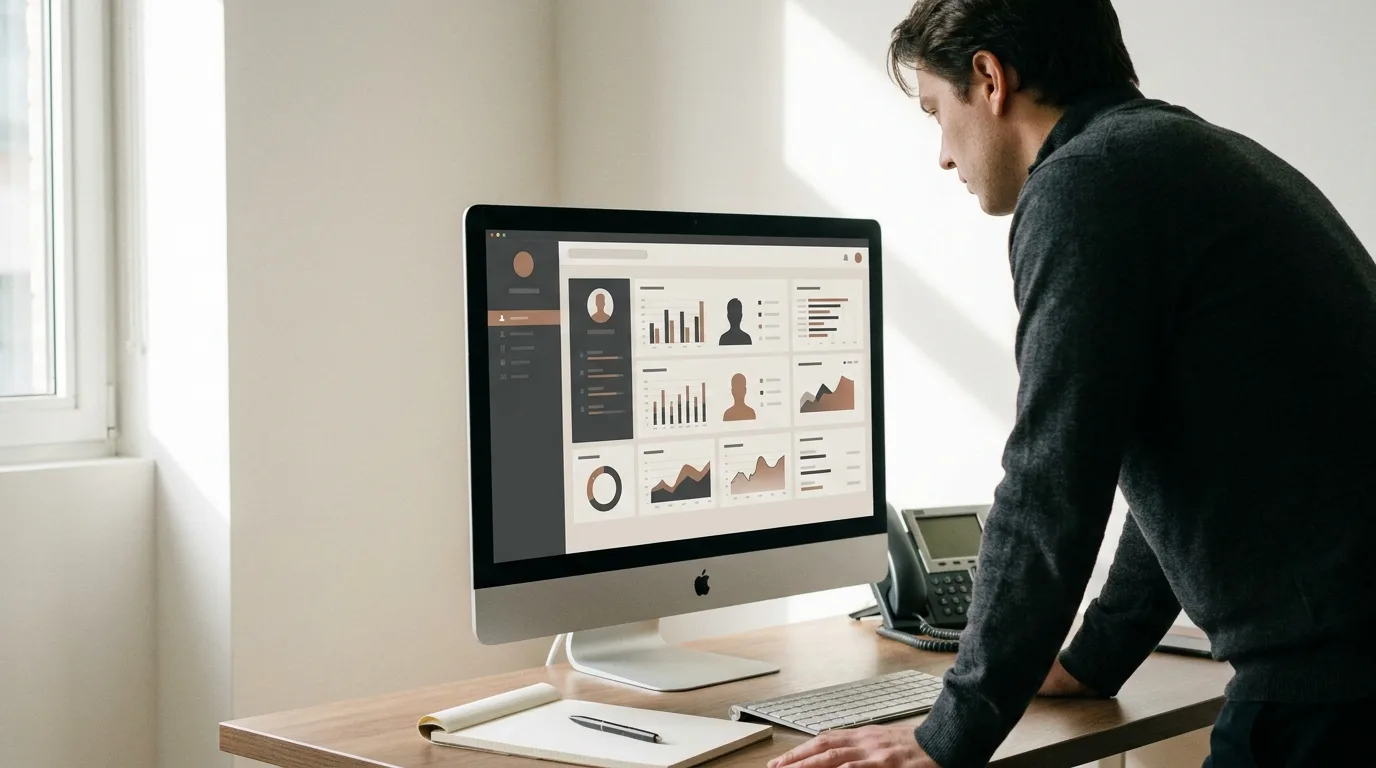
Using an ai sales assistant rapport building strategy can fundamentally change how your sales team functions. Most sales development representatives spend hours every day digging through LinkedIn profiles and company websites, hunting for the one detail that might spark a conversation. The manual process is slow and often yields generic results that do not resonate. You can stop this cycle by automating the research phase entirely. Modern tools now surface human-centric hooks without the heavy lifting of manual scraping, so your team can focus on what they do best: talking to people.
The efficiency gains from this approach are measurable and immediate. When you remove the burden of research, your SDRs can handle a much larger volume of leads. The quality of their outreach also improves because the AI identifies patterns humans often miss. Many teams find their response rates climb when they stop using generic templates and instead lead with specific, AI-generated insights. This creates a bridge between cold outreach and a warm conversation. You are no longer a stranger; you are a prepared professional with a relevant message.
Why ai sales assistant rapport building Beats Manual Scraping
Manual research is a linear process that limits your growth potential. A human can only research a handful of accounts per hour with high accuracy. In contrast, an automated assistant can scan thousands of data points in seconds, drawing on recent news, financial reports, and social media activity to find relevant hooks. This lets your team move through their lead lists with speed. The AI also does not get tired or bored, which keeps quality consistent for every prospect. That consistency is vital for maintaining a professional brand image across your entire market.
The depth of information these tools provide is superior to basic manual searches. While a human might find a prospect's university, the AI might surface a specific industry problem they recently mentioned on a podcast. These deep insights are the foundation of true rapport. Fast delivery also means your team always works with the most current data. If a company just secured funding, your assistant will flag it immediately, giving your outreach an edge that manual research simply cannot match.
| Feature | Manual Research | AI Sales Assistant |
|---|---|---|
| Research Speed | 10-15 minutes per lead | Seconds per lead |
| Data Depth | Surface level (LinkedIn) | Deep web and news analysis |
| Scalability | Low (Limited by headcount) | High (Unlimited volume) |
| Rapport Hooks | Generic or dated | Personalized and timely |
| Cost per Lead | High (Human labor cost) | Low (Software subscription) |
| Data shows significant advantages for AI-driven workflows. |
The Strategic Shift Toward Automated Intelligence
Leading analysts emphasize the importance of adopting these technologies to stay competitive. Research on sales AI from Gartner shows organizations moving toward algorithmic selling models that use data to guide every interaction. The shift is driven by the need for higher precision in a crowded market, and your competitors are likely already looking for ways to shorten their research cycles. Wait too long to adopt an automated framework and you risk falling behind. The barrier to entry for these tools is also lower than it has ever been.
Similarly, reports on the sales intelligence path to success from Forrester suggest that B2B buyers now expect a higher level of personalization. They are tired of generic messages that show a lack of research. Tailoring every message to the recipient's specific situation builds trust right from the start and shows you value the prospect's time. This level of preparation often leads to longer discovery calls, because when prospects feel understood they are more willing to share their pain points and challenges.
The Core of ai sales assistant rapport building: Automated Briefings
The most powerful feature of a modern ai sales assistant rapport building setup is the automated briefing. These briefings summarize everything a salesperson needs to know before a call, including recent company news, key executive changes, and shared professional interests. They are delivered directly into the rep's workflow, eliminating the need to switch between browser tabs and letting them enter every call with confidence. Better still, the summaries update in real time as new information surfaces on the web.
Think of an automated briefing as a digital cheat sheet for your sales team. It highlights the keywords and themes likely to resonate with the prospect and flags potential roadblocks before the conversation starts. If a company is undergoing a merger, the tool will surface it. It can also suggest the best time to reach out based on the prospect's historical engagement patterns. This level of detail helps reps avoid awkward mistakes, like asking questions the prospect already answered in public interviews or press releases.

Integrating Automated Intelligence into Your Workflows
Integration is the key to making any new technology work within a sales organization. Your intelligence tool must talk to your CRM so that everything it gathers is stored in one central location. That also enables better reporting and performance tracking. A seamless integration reduces friction for your reps: they don't have to learn a new system, they simply see the AI insights right where they already work. This unified view helps managers see which hooks are driving the most conversions across the team.
When you set up these integrations, focus on the experience for the SDR. The insights should be easy to read and even easier to act on. It is also worth planning how strategic AI sales tool implementation can prevent common technical pitfalls. Make sure your team understands how to use the data to enhance their own voice; the goal is not to replace the human but to empower them with better information. A well-integrated system can even trigger automated outreach sequences based on specific research triggers, creating a responsive sales engine that works around the clock.
The ROI of Automated Sales Intelligence Systems
Measuring the return on investment for one of these platforms comes down to time and quality. First, calculate how many hours your team saves by not doing manual research. Then look at the increase in meeting-set rates: most companies see a significant jump in pipeline value within the first quarter. The software usually costs far less than hiring more researchers, and it shortens ramp-up time for new hires, who can start booking meetings faster because the system handles the hard research for them.
Beyond direct financial gains, consider the impact on team morale. Manual research is often the most disliked part of a salesperson's day. Automating it lets your team focus on the high-energy parts of the job, which can reduce burnout and lower turnover. A happy, energized sales team is always more effective on the phone; they bring more passion to their conversations, which builds even more rapport with prospects. The ROI is both quantitative in dollars and qualitative in culture.
Finding Human-Centric Hooks in a Digital Sea
The biggest mistake teams make is using AI to find data but failing to turn it into a human hook. Even the best research only works if the rep knows how to use it. Knowing someone went to a certain college is data; mentioning that college's recent sports victory is a hook. The AI can help you find these more nuanced connections and avoid sounding like a bot. The best hooks relate the prospect's personal achievements to their professional goals, showing you have done your homework and care about their success.
To master this, your team should practice the 'pivot' from AI insight to human conversation. The tool might flag a prospect's interest in sustainable tech; the rep can then ask a question about the company's green initiatives. This makes the conversation feel natural rather than forced and helps you stand out from the dozens of other salespeople calling them. When you lead with a human hook, you lower the prospect's guard, and they are more likely to listen to your pitch once they feel a genuine connection has been made.
Data-Driven Techniques to Refine Your Rapport
Data analysis plays a major role in refining your rapport-building efforts over time. Track which types of hooks lead to the highest conversion rates, and run A/B tests on your openers to see whether industry-specific news or personal achievements work better for your audience. These AI sales tool strategies help you train the system to look for more of what works. Sharing the insights across the team ensures everyone benefits from the best-performing approaches, turning individual success into a repeatable team process.
Beyond simple open rates, look at the depth of the conversations that follow. You might find that strategic, AI-driven meeting prep leads to more second-round interviews. Analyze how long it takes to move a prospect from the first call to a closed deal, too. The data might show that certain personas respond better to different insights: CEOs may care about financial trends, while managers care about operational efficiency. Segmenting your messaging with that precision ensures the right message reaches the right person every time.
The Competitor Gap: Turning Data into Dialogue
Most sales content focuses on getting more leads faster but misses the pivot to conversation. It treats AI as a way to send more emails, not as a way to have better talks. An effective strategy bridges this gap by focusing on the 'why' behind the data. If the AI tells you a company is expanding, the 'why' might be a new product launch—so talk about the challenges of scaling a team during that phase. This shows you understand the pressure the prospect is under and positions you as a consultant rather than just another vendor.
This transition from raw data to meaningful dialogue is what separates top performers from the rest. Many people worry that automated AI sales assistant workflows will make sales feel cold. On the contrary, used correctly they make it more personal: you have time to think about the human on the other end of the line because you aren't stuck in a spreadsheet. The AI handles the boring parts of the job, leaving you the creative parts. This human-centric focus is what builds long-term trust and loyalty, turning a one-time transaction into a lasting partnership.
Mastering Cold Calls with Better Intelligence
Cold calling is often the hardest part of sales, but it gets easier with the right intelligence. With a briefing in hand, you never go into a call blind: you have a specific reason for calling that goes beyond 'just checking in.' Use the first ten seconds to prove you know who they are—that immediate relevance stops prospects from hanging up and sets a professional tone for the rest of the conversation. You are showing them you invested time in understanding their world before picking up the phone.
During the call, keep your briefing notes open and ready. Use them to ask follow-up questions that show you are paying attention, and don't be afraid to mention specific details the AI found, as long as it feels natural. Remember that the goal of the first call is often just to secure a second one. These insights also help you handle objections: if a prospect says they are too busy, you can cite a specific trend in their industry that makes your solution urgent. That turns a generic rejection into a tactical discussion about their business needs.
Scaling Your Outreach Without Losing the Human Touch
Scaling is the ultimate test of any sales process, and many teams lose quality as they increase volume. The right framework lets you grow without sacrificing the personal touch: you can maintain the same depth of research for your 1,000th lead as you did for your first. Automation ensures no lead is left behind and frees your best closers to spend more time closing and less time digging for emails. The system can also help you identify which leads are actually worth the effort based on their current business signals.
To scale successfully, you must constantly refine your prompts and intelligence settings—the tool is only as good as the instructions you give it. Review the output regularly to ensure it stays relevant to your changing market, and encourage your team to flag which insights are most helpful in the field. This continuous-improvement cycle keeps your sales engine running at peak performance and ensures your technology evolves alongside your business goals and customer needs. Scaling is not about doing more work; it is about doing smarter work.
In summary, the transition to an ai sales assistant rapport building model is a strategic move for any modern B2B team. It replaces slow, manual research with high-speed intelligence and helps build immediate trust by surfacing relevant, human-centric hooks. Integrating these tools into your CRM keeps the workflow smooth for your entire team, and the data-driven insights you gain allow for constant optimization and growth. By focusing on the human element while letting AI do the heavy lifting, you create a sales process that is both efficient and authentic. That is how you win in the modern sales landscape.
Action Steps for Sales Leaders
- Audit Current Workflow — Measure how many hours your SDRs spend on manual LinkedIn research and scraping every week.
- Select Intelligence Tool — Choose an AI assistant that integrates with your CRM and provides real-time company news alerts.
- Define Rapport Hooks — Identify 3-5 specific data points (like recent funding or new hires) that your team will use as openers.
- Train the Pivot — Conduct role-play sessions where reps practice turning an AI insight into a conversational human question.
- Monitor and Refine — Track conversion rates for different AI hooks and update your research prompts every month.
Frequently Asked Questions
Will an AI sales assistant make my outreach sound robotic?
No, if used correctly, it does the opposite. The AI provides the specific details that allow humans to write more personalized and relevant messages, moving away from generic templates.
How much time can we really save with automated research?
Most teams save between 10 to 15 hours per week per SDR. This time is redirected toward actual selling activities like calling and booking meetings.
Can I integrate these tools with Salesforce or HubSpot?
Yes, most modern AI sales assistants offer native integrations or API connections to the major CRM platforms to keep your data synchronized.
What kind of data does the AI look for to build rapport?
It scans for recent press releases, social media posts, financial reports, podcast appearances, and even shared professional experiences between the rep and the prospect.